Greetings from the 80s!

These beautiful eggs, contributed by my friends, the McManus family, and their happy hens, inspired me to make something special. How about a quiche?

They say that quiche is the quintessential food from the 80s — well, it had been ages since I made one, but probably not that long.

There was some asparagus in the fridge. And some cheese. So why not make one? Or how about two?

I blanched the asparagus, just for a minute, until bright green and barely tender.

Asparagus and eggs are such a natural combination.

The first quiche I made had no crust — so it was really more like a frittata than a quiche. I mixed 3 eggs, 1/2 a cup of milk, 3/4 cup cottage cheese (this is a little unusual — the classic quiche is just eggs, milk (or half-and-half)–salt, pepper and a little cayenne. I tossed in some grated cheese (sharp cheddar is what I had),  poured the mixture over some sauteed green onions and garlic that I’d put in the bottom of the pie plate, laid the asparagus on top and sprinkled with a little more cheese.

It baked for about 40 minutes at 375 degrees

It was a very nice little supper accompanied by some brown rice and salad.

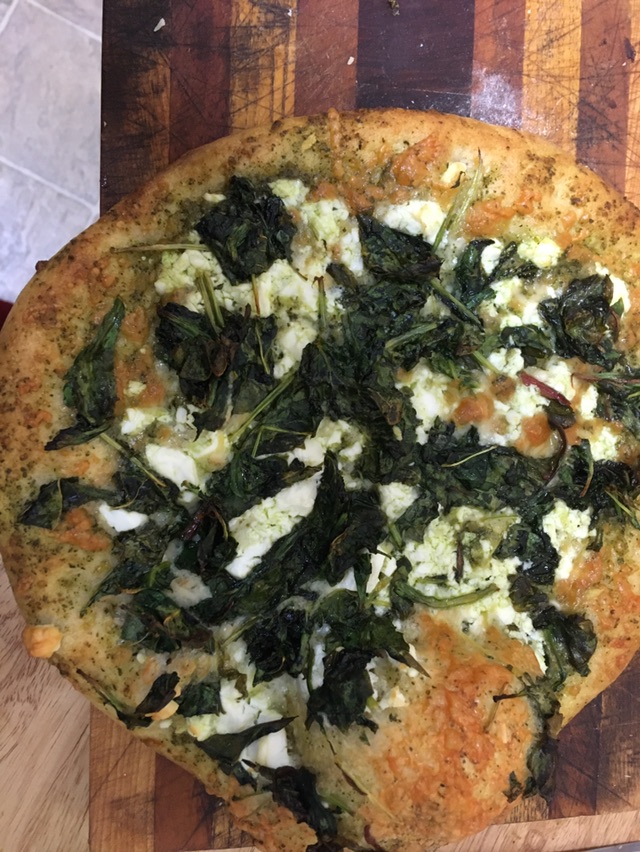
Then I decided to make a quiche. A real quiche, I mean (albeit a small one). This one had a pastry crust that I pre-baked for about 15 minutes.  Then I used a similar method for the filling (although I left out one egg yolk),  added some spinach to the sauteed onion and garlic to go on the bottom of the crust, and switched the cheese to Gruyere.  (This is a small 8-inch pie shell, though.  For a bigger pie, you’ll need more of everything. A basic guideline is 4 eggs, 2 cups milk or half-and-half, and a cup-and-a-half of grated cheese — but you can vary this.)

Asparagus lends itself to making designs

It was even more delicious, and the crust made it more satisfying.

So there was even some quiche left over for this morning’s brunch, served alongside some roast potatoes.

With a couple cups of coffee and the New York Times, it was just right for a Sunday morning. Here’s to the 80s!

2 Comments

Filed under Uncategorized

A cake for all seasons

Cake and coffee in the afternoon — the essential fourth meal of the day for many Germans and Austrians — was a standard in our house on Sunday afternoons, when my parents invited their friends, many of them Jews from Austria, Germany, Switzerland, or Czechoslavakia.  The cake and coffee ritual evoked a kind of elegant life, when people had time to converse at leisure, drink from fine china, and consume whipped cream, nuts, and chocolate on a regular basis.

My father remembered all this because he was already 28 when he left Germany.  His father had been a music and theater critic in Mannheim, and my father often accompanied him to performances and late dinners with the artists, meeting stars like dancer Anna Pavlova, conductor Arturo Toscanini, and renowned theatrical director Max Reinhart.  Though my father’s family was not well off, they led a cultured life — until they were ripped away from it all.  But the fine pastries, the cakes and tortes served as a reminder of those elegant times.

Our next door neighbors in Chicago, Henry and Margaret Newman, were also Jewish and had come from Vienna.  Henry had been in two concentration camps, and somehow Margaret had managed to get him out. Whereas my family had brought no material possessions to speak of from the old country — only recipes — the Newmans had been wealthy in Austria and were able to bring their china and silver settings and even furniture to America with them.  They became very good friends with our family, and Mrs. Newman, as we children always called her, quickly established a reputation for her desserts, especially the fine cakes she seemed to make for every occasion. She’d make a Kugelhopf — a  buttery yeast cake with raisins baked in a fluted ring mold — to eat after breaking the Yom Kippur fast every year, and serve it with generous dollops of whipped cream.  My mother was horrified that she’d serve such rich food after a fast, and indeed Mrs. Newman sometimes became ill after eating it — but she claimed it was worth the suffering.

For coffee parties and other gatherings, Mrs. Newman  made a rich chocolate Sacher torte layered with raspberry filling, or a cake of layered wafers,  or an apple strudel, again served with whipped cream. But the cake I remember most from her kitchen was a wonderfully light Viennese Chocolate Almond Torte, a flourless cake held together by a delicate bond of ground almonds, sweet chocolate, and beaten eggs.  Sometimes she split it open horizontally and filled it with red currant jelly.  Sometimes she made a white or a chocolate icing, and decorated it with whole almonds.  Most often, she served it in a classic Viennese way: with billowing clouds of lightly-sweetened whipped cream on top.

Mrs. Newman generously passed the recipe to my mother, who approved of the cake because, in truth, it contained no butter or cream, and was therefore not so rich as to offend my mother’s more moderate sensibilities.  My mother eschewed the whipped cream, of course, instead serving it with a simple dusting of powdered sugar, and Mrs. Newman taught her to lay a paper doily on the top of the cake before she sifted the sugar over it, so as to make a lacy design.

My mother lost the recipe for the torte, or perhaps gave her only copy to me, for I have a tattered index card with the recipe and serving suggestions typed on it, and I’ve been making the cake for more years than I can remember.

Margaret Newman has since passed away, but whenever I make this torte, I think of her in her 1950s kitchen on the South Side of Chicago, melting chocolate and brewing strong coffee, beating egg whites and grinding almonds — smelling the torte baking in her oven, and  remembering better days.

I’ve always made this cake for the Passover Seder feast, as it’s a time when we can’t use any flour. But this year, I had to adapt, as Steve is allergic to almonds. On Epicurious I found a chocolate-walnut torte that was very similar (Hungarian, the recipe said) and I tried combining the best of the two recipes for this year’s seder. It turned out to be the best one I’d made yet! I’m sure you could use almonds or hazelnuts in place of the walnuts, if you so desire.

Chocolate Nut Torte

  • 3/4 cup sugar
  • ½ cup strong coffee
  •     6 ounces semisweet chocolate, cut in small pieces, or good quality chocolate chips
  •     6 large eggs, separated
  •     6 ounces shelled walnuts (about 2 cups)
  •     3 tablespoons matzoh meal
  1. Line the bottom of a 9-inch springform pan with parchment or wax paper.
  2. Preheat the oven to 350°F.
  3. In a medium saucepan, combine 1/2 cup of the sugar and 1/2 cup coffee and bring to a boil, stirring constantly over medium heat until the sugar has dissolved. Remove the pan from the heat and stir in the chocolate until melted and smooth. Set aside to cool.
  4. Beat the egg yolks with an electric mixer in a large bowl until light and thickened, about 4 minutes. Grind the walnuts with the remaining sugar and the matzoh meal, using a food processor if you have one (or a nut grinder, in batches). Stir the walnut-matzo meal mixture into the egg yolks. Add the cooled chocolate mixture and combine thoroughly.
  5. Using clean beaters, beat the egg whites in another bowl, gradually adding the ¼ cup of sugar after the egg whites become foamy, until they hold stiff peaks. Gradually fold the whites into the chocolate-walnut mixture, incorporating them gently but thoroughly so that no whites are visible.
  6. Pour the batter into the prepared pan and bake for 30 to 35 minutes, until and almost set but still a little gooey in the center. It is ready when a wooden toothpick inserted an inch from the edge comes out clean.
  7. Remove the pan from the oven and let cool on a rack. When completely cool, release the springform. You can try inverting it onto a platter so you can peel off the parchment paper, or leave as is and take off the parchment paper after you cut each slice. If desired, lightly dust with Passover or other confectioners sugar or top with lightly sweetened whipped cream. Serve the torte at room temperature.

7 Comments

Filed under dessert, Praise for other cooks, spring, Uncategorized

The cooking o’ the greens

Since it’s nearly that very GREEN day of the year, St. Patrick’s Day, I’ve been thinking about edible greens, and one very important cooking tip I learned long ago from my Italian grandmother. No wait — she wasn’t really my grandmother, but the nonna of my ex-husband. No matter. She had some great cooking tips, and I’m always eager to learn about cooking from Italians.

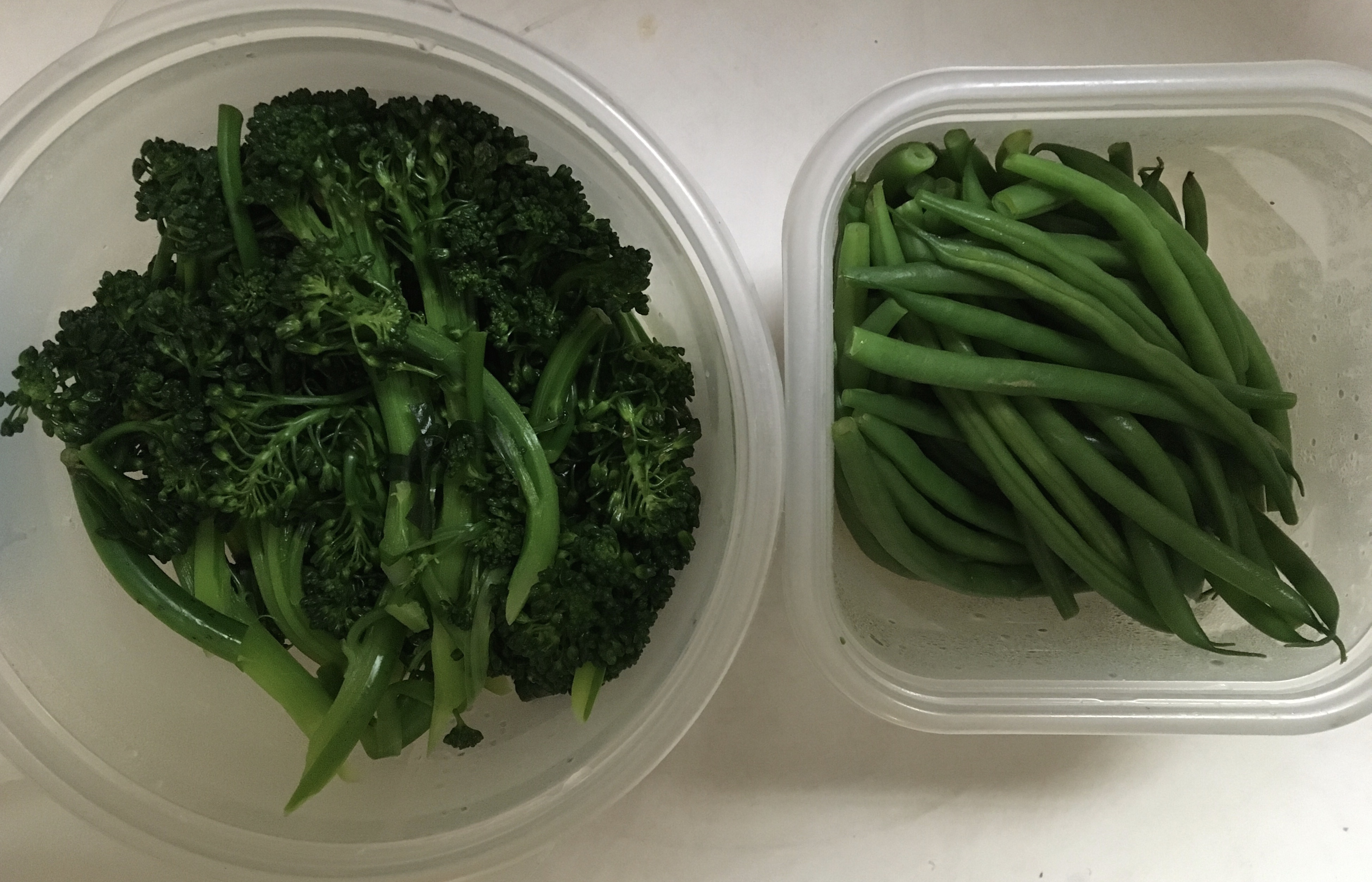
It was simple: after you buy your green vegetables at the market, she said, go home and parboil them (parboiling is simply a brief boiling, which is an incomplete form of cooking). The vegetables will stay fresher in the parboiled form, kept in a covered container, and when you’re ready to eat them, you can toss them in a saute pan without worrying that they’ll be tough or undercooked.

I served the greens and vegetables over some polenta

I confess, I don’t always do this, but with heartier (or tougher) green vegetables such as broccoli or curly kale, I’m very glad when I do. It’s true that the greens stay fresher longer in the fridge (or you can freeze them for a practically unlimited life span) and it’s quicker and easier to add them to any recipe, so I’m likelier to eat my greens.

Saute some onions and mushrooms as I did here, add the greens and maybe some red pepper and serve over polenta — or pasta, brown rice, bulgur, risotto, barley…..of course, you can season and add proteins (chicken, fish, tofu) or not as you like…..

Leftover polenta and parboiled kale made another quick meal.

Well, it’s been more than 35 years since Nonna Miccucci told me that little cooking tip, but it’s stuck with me ever since. It’s a basic lesson: spending a little time now will save time and aggravation (i.e. wilted vegetables) later.

One good tip can go a long way in the kitchen, and maybe also in life.

2 Comments

Filed under Praise for other cooks, supper time, Uncategorized, vegetables, winter

Saturday afternoon pie


It was a grey and dreary February day, and I was in the mood to make a little late afternoon sweet. I’d been thinking about cherry pie ever since George Washington’s birthday on Feb. 22.

When I was a child, I often heard the story about how young George, trying out his new hatchet, chopped down a cherry tree. When his father came along later and saw the damaged tree, he asked his son if he knew who the culprit was, the story goes, and George answered: “I cannot tell a lie, Pa. I did cut it with my hatchet.”

Growing up in Illinois, we always had Feb. 12 off from school for Lincoln’s birthday (sadly, not associated with any type of pie) and Feb. 22 off for Washington’s birthday, which was always celebrated with cherry pie.  One time when I was about 12 my father took me out to lunch at a fancy restaurant in Chicago’s Wrigley Building on Washington’s birthday.  I don’t remember what we ate for main course, only that it was a very special treat — and that, naturally, we had cherry pie for dessert.

Anyway, this Saturday, three days after George’s birthday, I was too lazy to make a real pie (and in any case I didn’t have enough quite enough pie cherries in my freezer for a big pie) so I decided to just wing it and create my own cookie-cutter topped cherry concoction. I made a pie dough (using about 3/4 cup flour, 3 tablespoons of butter, a little salt and some ice water), rolled it out and cut it with my cookie cutter.

I mixed the thawed pie cherries with a couple spoonfuls of flour, some sugar (I had to guess how much, but it turned out just right) and a little orange peel, and put the cherry mixture in a pie pan, then placed the flower-shaped pieces of dough atop and sprinkled them with a little demerara sugar.

After about 35 minutes, the cherries were bubbling and the pie dough was golden. I took this bottom-less pie out of the oven and let it cool down just a bit while I made a pot of Italian decaffeinated coffee and took out some rarely used fancy dessert plates.

In honor of George (albeit a little after his birthday) we enjoyed our cherry pie and coffee — and the dreary day became a cheery one.

Oh, by the way, it turns out the story about George Washington chopping down the cherry tree is false, a  fabrication of George Washington’s biographer. Nevertheless, as Maira Kalman writes in her fabulous blog about George (which I was happy to revisit today) he was likely a moral man — and also quite likely, partial to cherry pie.

2 Comments

Filed under dessert, fruit, musings, Uncategorized, winter

A Valentine vegetable

Have you ever noticed that out-of-season produce such as asparagus and strawberries are popular choices for Valentine’s Day dinners?

What’s wrong with a good winter root vegetable with a deep garnet color and a heart-like shape? Yes, of course, I am talking about our humble friend, the beetroot.

Its cultivated form, says the Oxford Companion to Food (on whose cover is a photo of beetroot), is descended from the sea beet, B. maritima, that grows wild around the Mediterranean and Atlantic coasts of Europe and N. Africa.  There are various forms and colors, but the red beet, with purple and yellow pigments combining to produce its strong scarlet color, was embraced soon after its introduction to England in the 17th century. Its juice is often used as a natural food coloring.

French and Italian chefs cut the beets into interesting shapes and figures for their salads.

That reminds me that my sister Milly once made a beet borscht for Valentine’s Day, cutting all the beets into heart shapes.

Though heart-beets (pun intended) were too much trouble for me — and even Milly noted that she did that only once, long ago — I did think a beet salad would be nice around Valentine’s Day — a salad described quite fittingly in 1699 as “a grateful winter Sallet.”

The salad I made is a classic combo: cooked cut beets are dressed with a vinaigrette and served atop greens with some toasted walnuts and a dollop or two of goat cheese.

Of course there are countless variations on this theme. I added orange zest and a little fresh orange juice in addition to the oil, balsamic vinegar, salt and pepper, but a dressing made with lemon zest and juice would certainly be just as nice.  You could serve it warm and serve on gently cooked beet greens. You could use hazelnuts in place of walnuts, feta cheese instead of goat cheese. Or omit the cheese altogether, and add some segments of orange or mandarin….

About cooking beets: I wrapped them in aluminum foil, put them on a baking sheet and baked them at 350 degrees for a long while –about an hour — but I’ve  read of a quick method for those with microwave ovens: simply put a few beets in a covered microwave dish and cook until tender, about 5 minutes.

In both cases, rinse the beets under cool water and slip off their skins (which will temporarily stain your fingers pink) before cutting into wedges, slices, matchsticks, or whatever shapes strike your fancy. Even hearts.

I did cut one heart-beet for this quick little print

After your grateful winter beetroot salad, there will still be plenty of room for dessert.

A happy Valentine’s Day to all of you!

5 Comments

Filed under salad, supper time, Uncategorized, vegetables, winter

Fresh from the pantry (with a little help)

The other day, when snow and ice prevented me from the serious weekly trip to the grocery store, I turned to my cupboard for ideas. Cathy had just written me that she’d made borscht and I remembered the cabbage-beet borscht I make from time to time. I’d lost the actual recipe long ago, but I remembered that with a certain number of canned goods, a cabbage and an onion, you could make a hearty pot of soup.

I chopped a large onion, shredded half of a medium-large cabbage and sauteed them in a little olive oil in my Dutch oven, then put the lid on and “sweated” the vegetables till they were tender.

Then I put in a pinch or two of  thyme, a can of chopped tomatoes, a couple tablespoons of tomato paste, and a can of beets with their juice (Note: I had whole beets in a can so I diced them. Of course, you could use fresh beets instead, and I felt a little guilty using canned beets, so I later added some beets I’d roasted in the oven wrapped in foil, then diced).

Then I added about 6 to 8 cups of light broth or mixture of water and broth (chicken or vegetable) and a bay leaf, and let the whole thing simmer for about an hour.

As you can see, the soup turns a lovely color somewhere between coral and plum. Now here’s the part that makes it borscht-like: the sour-and-sweet. Many traditional borscht soups (beet soups, basically) are naturally sour from fermentation, but you can achieve a similar flavor by adding lemon juice or vinegar to the soup before serving, and balancing the acidity with a little  sweetness from brown sugar or honey.

I used a few tablespoons each of lemon juice and brown sugar — how much and how sweet or sour is a matter of taste.

With a piece of dark bread and maybe a little cheese, it’s good peasant food to warm you up on a winter day.

Other meals can emerge from the cupboard (and freezer) too — like the black-bean salad I made yesterday.

I started with a can of beans, some corn from the freezer, and a little bulgur from the cupboard. In the summer I like cherry tomatoes in this salad, but for this winter version, I used more-available fresh ingredients:  green onions,  cilantro, and red pepper (and of course, you could use bottled roasted peppers or frozen peppers instead).

Dressed with a little oil and fresh lime juice, salt, cumin and ground chipotle (one could add some diced jalapeno or hot sauce for more heat), it’s another quick and simple meal –and all from what I had on hand.

For this time of year, when we non-Californians are deprived of the pleasure of farmers markets and farm stands, it may be worthwhile to take a look through the pantry (cupboard or freezer — what have you) and see what you have.

The contents of those long-neglected cans, bottles, jars or packages — with a little help from the produce department –just might lead to the next inspiration….

p.s. I try to always have lemons, onions, olive oil and some pecorino cheese on hand. With three of these four ingredients, along with some dried pasta and some capers I keep in my fridge, I can always make lemon linguine (or spaghetti or fettuccine) for supper.

2 Comments

Filed under salad, soup, supper time, Uncategorized, vegetables, winter

Soup’s on (salad too)

'Soups on' block print by Aviva Steigmeyer

My daughter recently sent me some lovely cards she’d made, and I think this one just captures the mood of the season. It’s time for soup!

Since New Year’s Day, I’ve been on a soup-making kick. I’ve made my old favorites, like the parsley-potato soup, pictured above, and tried out some new variations, like Martha Rose Shulman’s cauliflower-curry soup, also pictured above.

The great revelation of 2011 was the immersion hand-blender, which simply renders vegetables into creamy soups — without any cream. The wonder of it, though, is in the clean-up — snap off the blending-part of the stick and wash it. The hand blender has made life (at least when it comes to blending) so much easier that I’ve semi-retired my regular blender to an undisclosed under-the-counter location. (The hand blender is also wonderful for smoothies…. my favorite is mango lassi made with frozen mango chunks, yogurt and milk…)

Some other soups I’ve made in the last week: broccoli-potato (another for the hand blender, and good with a little nutmeg and pepper),  minestrone, and Lebanese lemony-lentil with spinach.

Italians say that eating lentils on New Year’s Day (Capodanno) will bring you luck (the lentils are said to resemble coins and thus eating them will increase  your chance of becoming rich). Though I made my lentil soup a few days after Capodanno, it still couldn’t hurt to eat lentils…

Though there are plenty of ways to make lentil soup, this recipe remains my favorite version, and it’s particularly nice that I almost always have all the ingredients I need in my kitchen already. I like to add a little cayenne, chipotle or cumin to spice it up a bit.

Along with your soup, enjoy some good bread, of course (it won’t kill you). Also, how about a little salad?

Spinach salad with Cara-cara oranges and feta cheese

Citrus is especially nice in a winter salad, I think — adding bright color, contrast and refreshing tart-sweet flavor. I used oranges in these salads, but sections or pieces of grapefruit, mandarins or Meyer lemons would all be just fine as well. Or mix several kinds of citrus with a vinaigrette, with or without lettuce or greens. Or avocado.

Avocado and oranges with marinated red onions and cilantro

1 Comment

Filed under salad, soup, vegetables, winter

Secret recipes (and too many cookies)

Even I — someone who does not celebrate Christmas or attend many (any?) holiday parties — got swept up in the annual cookie-baking frenzy this year.  I made Hanukkah half-moons (a variation on absurdly rich snowball cookies), refrigerator cookies with hazelnuts and, pictured above, triple ginger cookies.

Those ginger cookies captured most of my attention.

Years ago, I looked forward to receiving a box of fabulous triple ginger cookies from my sister’s boyfriend every December. They were spicy and chewy, with bits of candied ginger adding extra texture and heat. My daughter and I loved them. We asked for the recipe, but were told that it was a secret.

I’m still miffed that when my sister broke up with Matthew (“Mateo,” she called him), she let him get away with the secret recipe.

But this year, I thought: Things are different these days — there’s the Internet.

Epicurious.com offered this highly rated recipe and I gave it a try, doubling the amount of grated and powdered ginger but otherwise following it closely.

The first batch I baked had a good flavor but came out way too hard, so I reduced baking time to 11 minutes. Much better, but they still weren’t chewy enough, the candied ginger wasn’t as distinct, and the cookies seemed a little too puffy.  Too much baking soda? Different candied ginger? More butter?

I don’t know, but they just weren’t quite as wonderful. Let me know if you have any suggestions (and Mateo, if you’re out there — it’s time to share the secret!)

Maybe I’ll try again — next year.

For now, I am so burned out on cookie making, with all that butter and sugar. Basta! with the cookie baking!

It’s edging toward that time of year when I resolve to eat healthier snacks. Nice juicy, sprightly mandarins are my current choice (though I must say they do go well with the ginger cookies, and even the hard over-baked ones can be dipped in coffee or tea).

Satsumas are a type of mandarin. When sold with stems and leaves, you know they're fresh.

2 Comments

Filed under Uncategorized

You never know….

….where the next idea may be coming from.

I was standing at the checkout counter of the grocery store ready to pay for a baguette when the checker called over to another checker: “I have to tell you about my latest method of making brussels sprouts. They’re so delicious!”

“I want to know too,” I said.

“Okay, first you roast them with a little oil and salt and pepper. Then you dress them with a mixture of balsamic vinegar and maple syrup.”

The next day I had to try it. The roasted brussels sprouts — cut in half and the tough end part removed–were a revelation in themselves. First, the outer leaves fell off and turned crispy, delicious for snacking before the rest were done. After about 20 minutes in a 400 degree oven, the sprouts were ready for the plate.

For a pound of brussels sprouts, I had cooked down 2 tablespoons each of balsamic vinegar and maple syrup till it was reduced to about half and starting to thicken. (Instead of the vinegar-maple syrup combo you could use an aged balsamic vinegar alone, or some pomegranate molasses, available in Middle Eastern stores, for that tart-sweet flavor.)

Then it was simply a matter of transferring them to a favorite plate, and drizzling the sauce over them. Simply a good idea, from grocery store to table.

Maybe even for those people who think they don’t like brussels sprouts.

You never know…

3 Comments

Filed under Uncategorized

Thankful for leftovers

This Thanksgiving, I took a twist on the traditional green beans, and dressed them up with some lemon zest, toasted hazelnuts and pomegranate seeds.

I really love the juicy tang and jewel-like appearance of the pomegranate seeds. And last year I learned how to get the seeds out  with the not-so-secret underwater method (only the pomegranate is underwater, not the person doing the seeding), which is easy to find on the Internet.

Once Thanksgiving, and all this cooking frenzy is over, at least for the time being, it’s a lovely time for leftovers. “Leftover” is not the prettiest word, but for many people, it’s one of the favorite parts of this holiday.

Turkey sandwiches are classic, of course, and back when Thanksgiving was at my house, there was always turkey-barley soup on the stove.

But this year, even though our hosts, Nell and Marc, generously let us pack up  leftovers to take home, we didn’t have enough turkey for the classics. So, I got the idea to make a turkey-pot pie with the little we had and a lot of vegetables. At home I found onion, carrots, potatoes, a fennel bulb, frozen peas and corn, and the filling was on its way. I diced up the turkey we had (while thinking one really could make this a vegetarian meal…)

Then I decided to make it even easier by making it into a cobbler. I remembered making something from Mark Bittman’s recipe, and sure enough, that recipe has the best easy cobbler- topping.

Not all of the filling I made fit in my pie pan, so the next day I added some sauteed mushrooms to the mix.

I think a mushroom cobbler sounds like a good idea

Mmmmmm……..we gobbled most of that one up too.

Guess what? There were enough pomegranate seeds left over to toss into a salad to accompany the cobbler. They made a wonderful contrast to the deep green of the spinach leaves — and yet another reason to be thankful for leftovers.

3 Comments

Filed under Uncategorized